

Iron Water in Florida: The Complete Homeowner's Guide (2026)
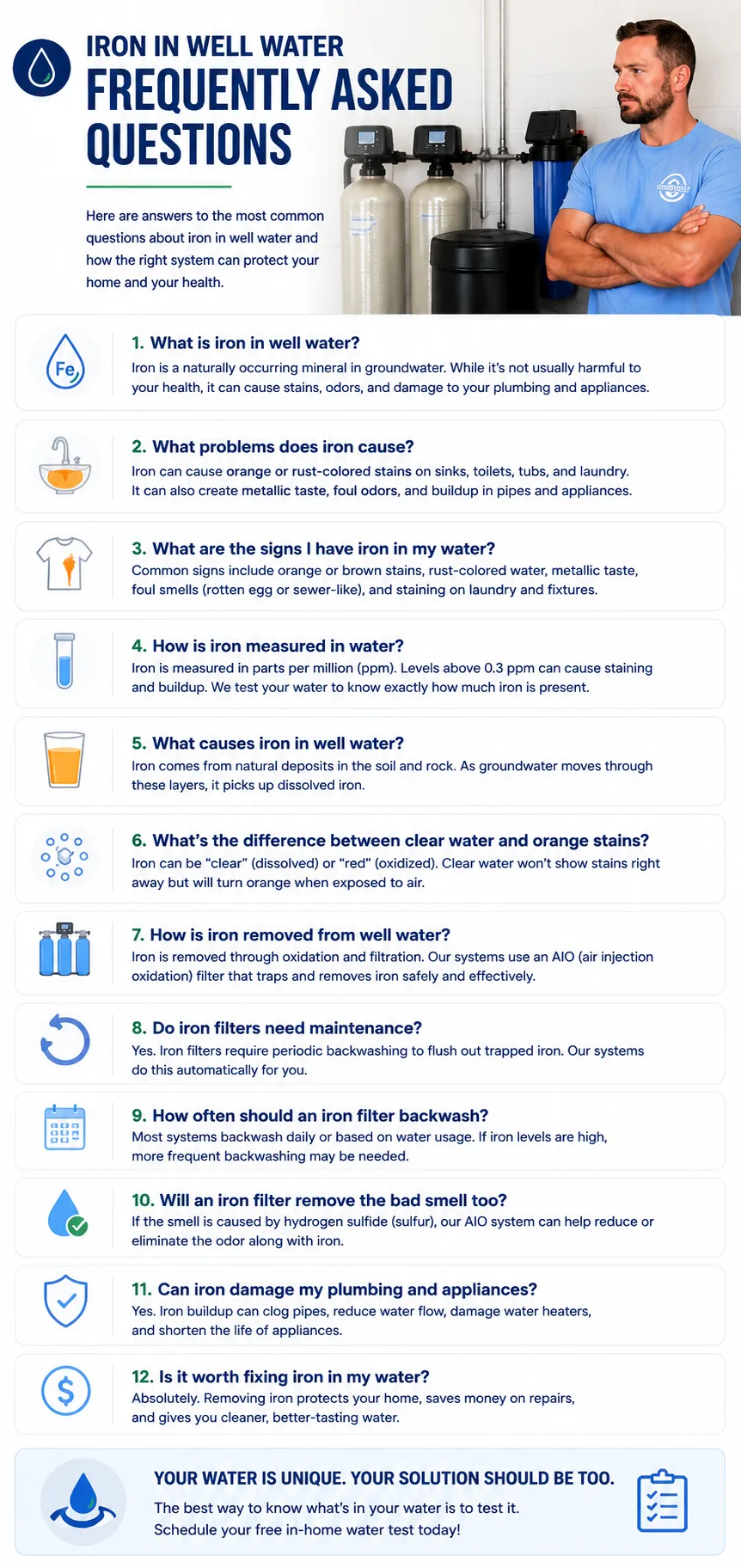
If your toilets, sinks, bathtubs, or laundry are constantly developing orange or rust-colored stains, there's a good chance iron is present in your water. Iron is one of the most common water quality issues affecting private wells throughout Florida. While it usually isn't considered a serious health concern, it can stain fixtures, shorten the life of appliances, foul plumbing, and make your water unpleasant to use. In this guide, we'll explain what causes iron, how to identify it, and how to choose the right treatment solution for your home.
What Is Iron in Well Water?
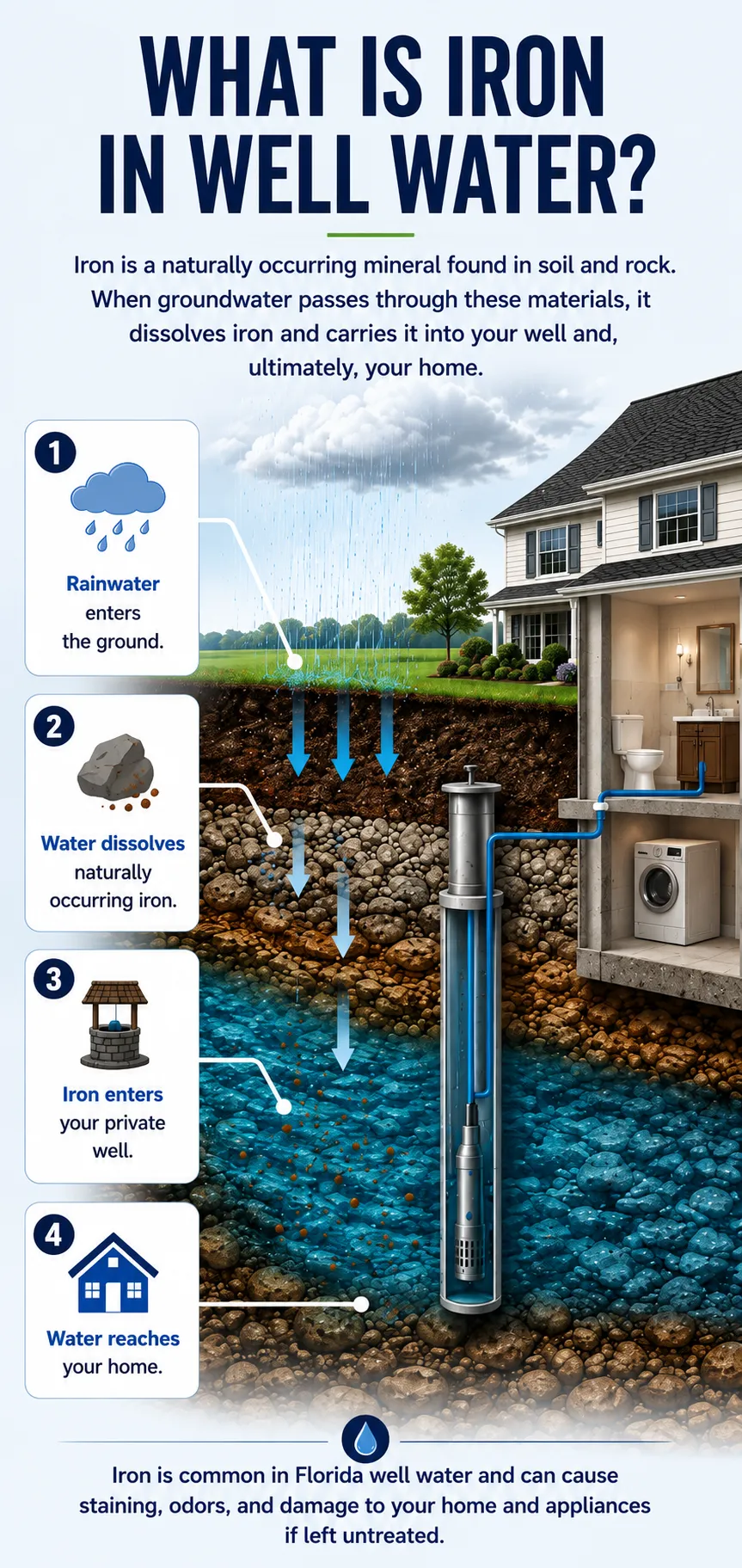
Iron is a naturally occurring mineral found throughout the earth, and it's one of the most common water quality issues affecting private wells in Florida. As rainwater seeps into the ground, it slowly travels through layers of soil, sand, clay, and rock before reaching underground aquifers. During this natural process, the water dissolves small amounts of minerals—including iron—and carries them into the groundwater that supplies your well.
The amount of iron present depends on the local geology, the depth of the well, groundwater conditions, and even seasonal changes. That's why two neighboring homes can have completely different water quality, even if their wells are only a few hundred feet apart.
In many cases, water containing iron looks perfectly clear when it first comes out of the faucet. However, once the dissolved iron is exposed to oxygen, it begins to oxidize, forming tiny rust particles that can leave behind the familiar orange or reddish-brown stains on toilets, sinks, bathtubs, showers, and laundry. Other wells may produce water that already appears yellow, orange, or brown because the iron has oxidized before reaching your home.
Iron itself is not a sign that your well was poorly constructed or that something is wrong with your water supply. It is simply a naturally occurring mineral that many Florida homeowners encounter. The challenge is that not all iron behaves the same way. Different forms of iron require different treatment methods, which is why proper water testing is one of the most important steps before choosing a water treatment system. Identifying the type and concentration of iron, along with other water quality factors such as pH, hardness, sulfur, manganese, and tannins, ensures that the treatment system is designed specifically for your home's water rather than relying on a one-size-fits-all solution.
Common Signs of Iron in Your Water
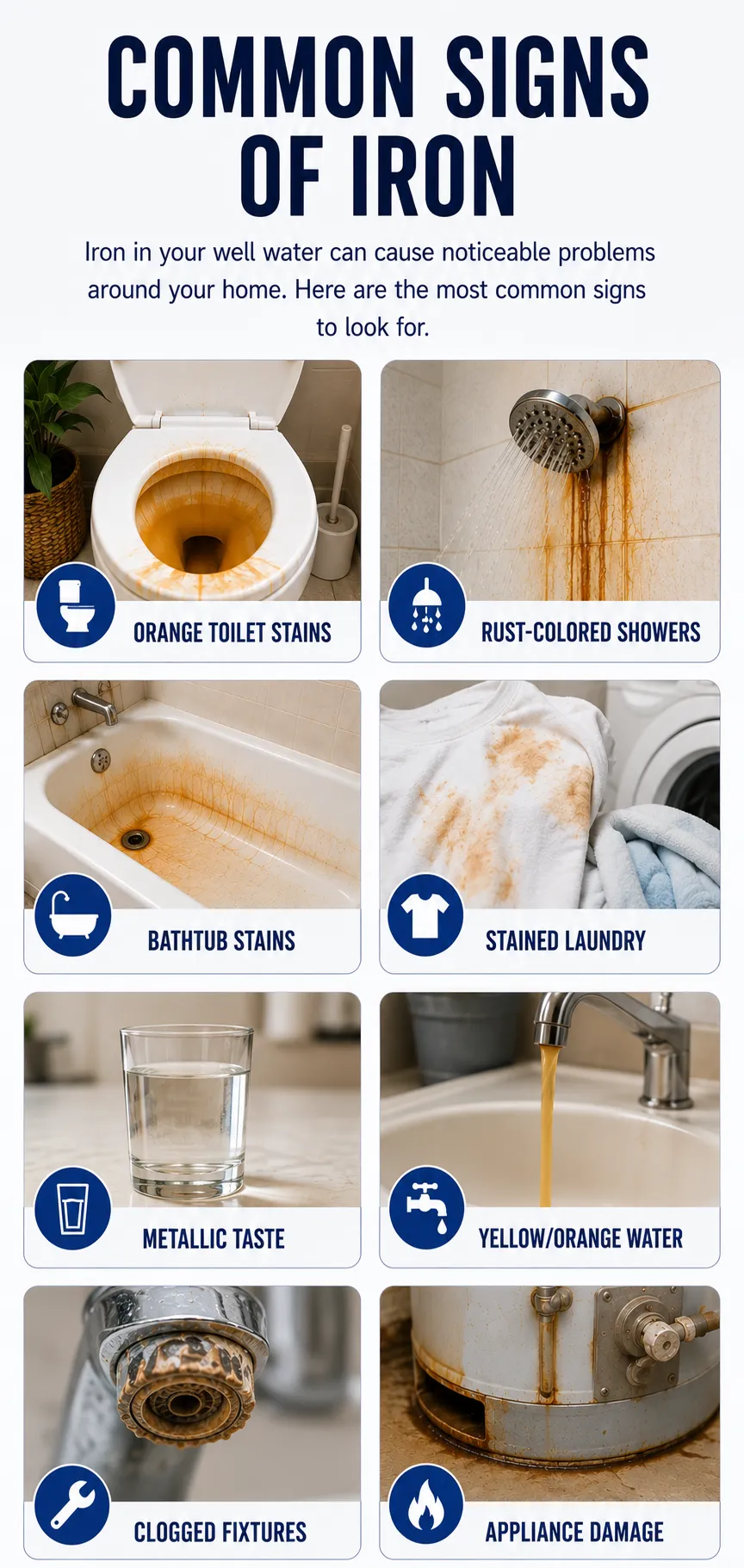
Iron in well water can reveal itself in several ways, and the symptoms often become more noticeable over time. One of the most common signs is orange or reddish-brown staining on toilets, sinks, bathtubs, showers, and other plumbing fixtures. These stains can be difficult to remove and often return shortly after cleaning.
Many homeowners also notice yellow, orange, or brown discoloration in their water, especially after it has been sitting in pipes or after a water softener regeneration. In some cases, the water may come out of the faucet crystal clear but gradually turn orange as dissolved iron reacts with oxygen.
Iron can also leave rust-colored stains on white clothing, towels, and bedding, making laundry appear dingy or permanently stained. A metallic taste in drinking water is another common complaint, particularly when iron concentrations are elevated.
Additional signs include reddish sediment collecting in toilet tanks, clogged faucet aerators and showerheads, reduced water flow caused by iron buildup inside plumbing, and premature wear on water-using appliances such as water heaters, dishwashers, washing machines, and ice makers.
The Different Forms of Iron in Well Water
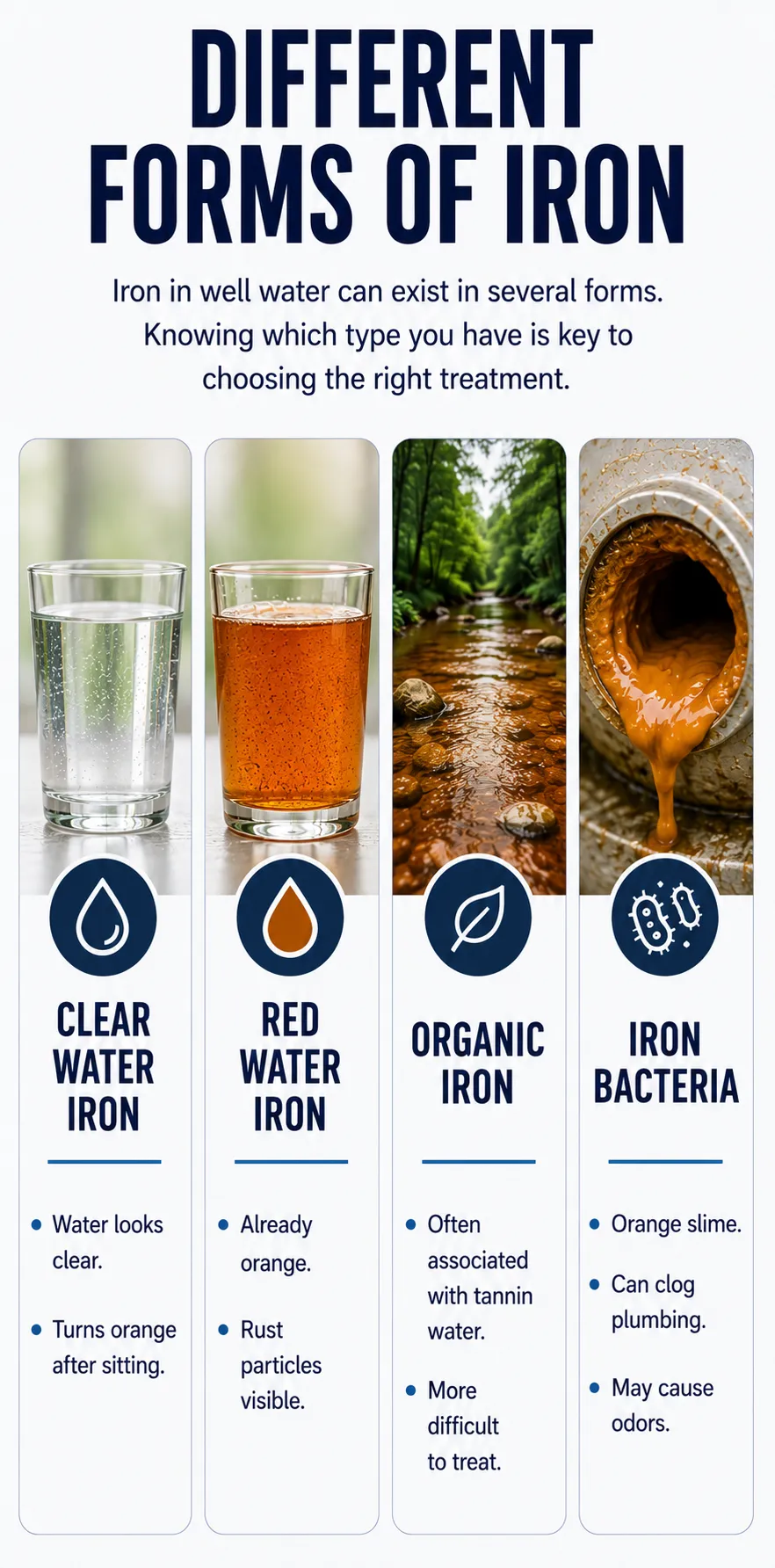
One of the biggest misconceptions about iron in well water is that it's always the same. In reality, iron can exist in several different forms, and understanding which form is present is one of the most important factors in choosing the right treatment system. Two wells may have similar iron concentrations but require completely different treatment methods because the iron behaves differently in each water supply.
This is one of the main reasons professional water testing is so important. Simply knowing that your water contains iron doesn't provide enough information to recommend the best solution. The type of iron, along with your water's pH, hardness, sulfur, manganese, tannins, and other characteristics, all influence which treatment system will perform the best.
Ferrous Iron (Clear Water Iron)
Ferrous iron, often called clear water iron, is the most common form found in Florida well water. In this form, the iron is completely dissolved in the water, making it invisible as it travels through your plumbing. Water containing ferrous iron usually appears perfectly clear when it first comes out of the faucet.
However, once the water is exposed to oxygen, the dissolved iron begins to oxidize. Within minutes, the water may turn yellow, orange, or brown as tiny rust particles form. This is why many homeowners notice a glass of water changing color after it has been sitting on the counter or why freshly cleaned toilets quickly develop orange stains.
Ferric Iron (Red Water Iron)
Ferric iron, commonly known as red water iron, has already oxidized before reaching your home. Instead of being dissolved in the water, the iron exists as tiny rust particles suspended throughout the water.
Because the oxidation has already occurred, water containing ferric iron often appears yellow, orange, reddish-brown, or cloudy immediately after it leaves the faucet. These suspended rust particles can settle in toilet tanks, clog plumbing fixtures, and leave heavy staining throughout the home.
Organic Iron
Organic iron occurs when iron bonds with naturally occurring organic compounds in groundwater. In Florida, this is often associated with wells that also contain tannins, which can give the water a tea-colored appearance.
Organic iron is typically more difficult to remove than clear water or red water iron because the organic material helps keep the iron suspended in the water. Standard treatment methods that work well for other forms of iron may not be effective, making proper water testing especially important before selecting a treatment system.
Iron Bacteria
Although often discussed alongside other forms of iron, iron bacteria are not actually a type of dissolved iron. Instead, they are naturally occurring microorganisms that feed on iron found in groundwater.
As they grow, iron bacteria produce a thick orange, brown, or reddish slime that can coat well casings, pressure tanks, plumbing, and fixtures. This slime can clog pipes, reduce water flow, foul treatment equipment, and sometimes create musty or swamp-like odors. Simply removing the dissolved iron may not eliminate an established iron bacteria problem, which is why proper diagnosis is essential.
What Causes Orange Stains?
Orange stains are one of the most common signs of iron in well water. They develop when dissolved iron, often called clear water iron, comes into contact with oxygen. While the water is underground, the iron remains dissolved and may appear perfectly clear as it flows from your faucet. Once the water is exposed to air, however, the iron begins to oxidize, forming tiny rust particles that attach themselves to surfaces throughout your home.
These rust particles gradually build up on toilets, sinks, bathtubs, showers, faucets, and even glass shower doors, creating the familiar orange or reddish-brown stains that can be difficult to remove. White clothing, towels, and other laundry are also especially susceptible to staining, as the iron becomes trapped in fabric fibers during the wash cycle.
The severity of staining depends on several factors, including the concentration of iron in your water, how often surfaces remain wet, and how long the iron is allowed to accumulate. Even relatively low iron levels can produce noticeable staining over time, while higher concentrations can leave visible stains within days or even hours after cleaning.
Although many homeowners assume these stains are simply caused by hard water or poor cleaning habits, orange staining is often a strong indication that iron is present in the water supply. Removing the stains alone will not solve the problem, as they will continue to return until the iron itself is properly treated. Identifying the source of the iron through professional water testing is the first step toward preventing future staining and protecting your home's plumbing fixtures and appliances.
Is Iron in Drinking Water Safe?
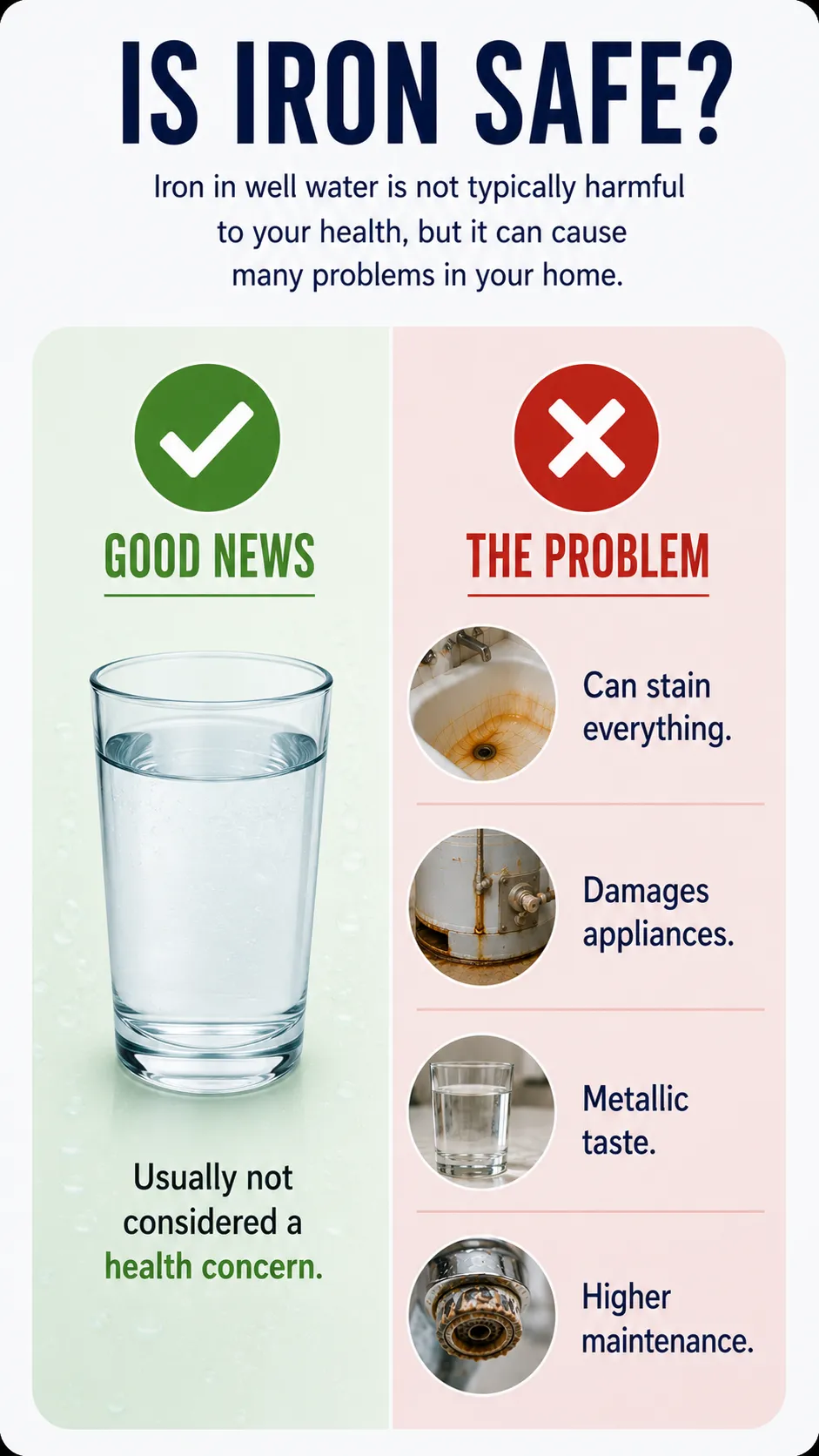
For most homeowners, iron in drinking water is not considered a significant health concern. Iron is a naturally occurring mineral that your body actually needs to produce healthy red blood cells and transport oxygen throughout the body. In fact, many foods such as spinach, beans, red meat, and fortified cereals naturally contain much higher amounts of iron than are typically found in well water.
The U.S. Environmental Protection Agency (EPA) classifies iron as a Secondary Drinking Water Contaminant, meaning its recommended limit is based primarily on aesthetic concerns rather than known health risks. The EPA's secondary standard for iron is 0.3 milligrams per liter (mg/L). Water exceeding this level may develop an unpleasant metallic taste, discoloration, and staining, but it is generally not considered unsafe for healthy individuals to drink.
While iron itself is usually harmless at the concentrations found in private wells, it can create a variety of nuisance problems throughout the home. Elevated iron levels can stain toilets, sinks, showers, and laundry, clog plumbing fixtures, foul water treatment equipment, reduce the efficiency of water heaters, and leave water with an unpleasant taste or odor. These issues often become more noticeable as iron concentrations increase.
It's also important to understand that iron and iron bacteria are not the same thing. Iron bacteria are naturally occurring microorganisms that feed on iron and can produce slimy orange deposits, unpleasant odors, and clogged plumbing. Although they are generally not considered disease-causing, they require a different approach than simply removing dissolved iron.
If your water contains noticeable iron, the goal of treatment is usually to improve the quality, appearance, taste, and performance of your water rather than to address a health hazard. A professional water analysis can determine the iron concentration, identify other water quality concerns, and help ensure the right treatment solution is selected for your home's specific water chemistry.
How Iron Affects Your Home
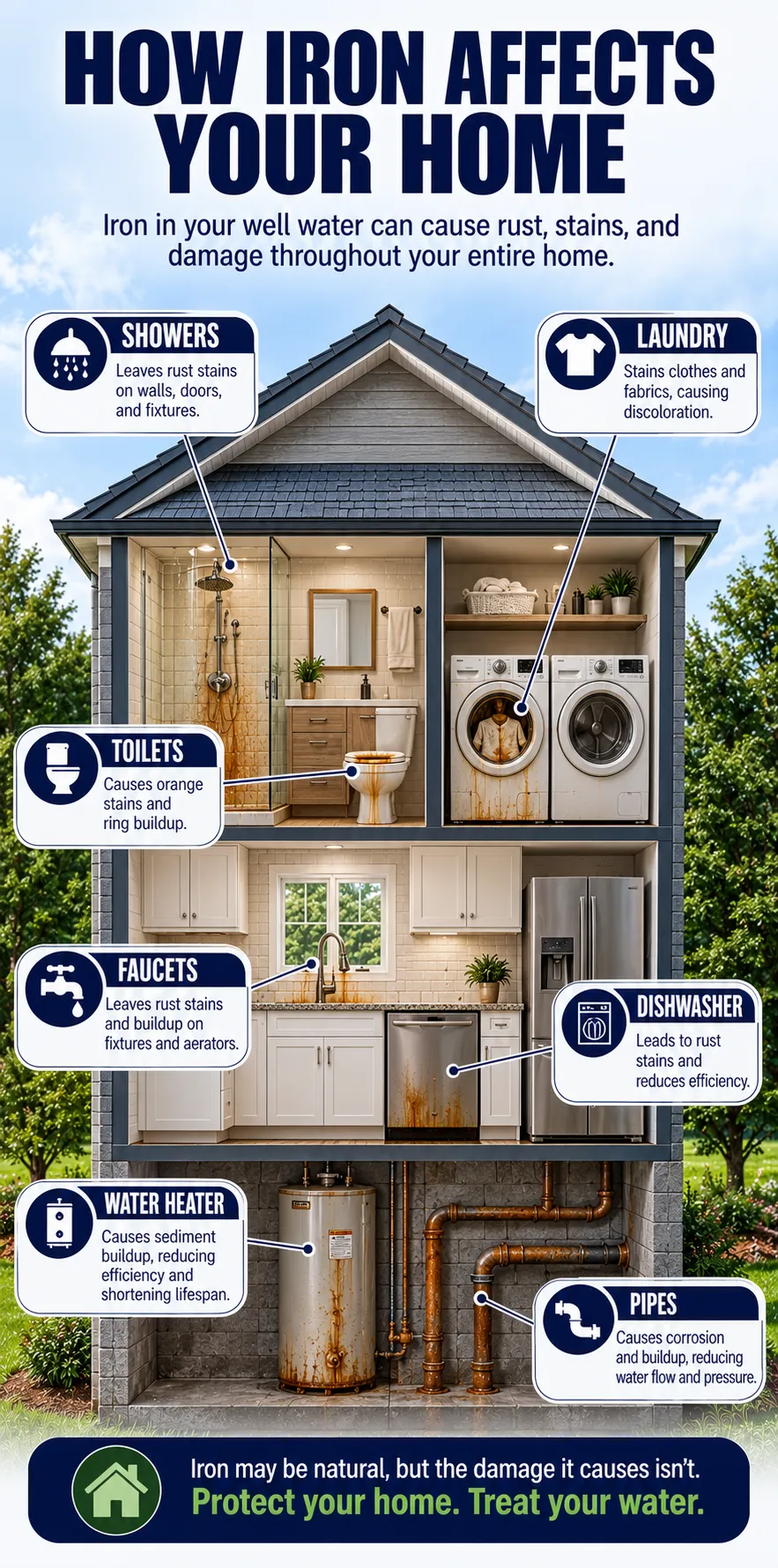
Iron in well water can impact much more than the appearance of your toilets and sinks. Over time, iron deposits accumulate throughout your plumbing system, water-using appliances, and fixtures, leading to increased maintenance, reduced efficiency, and costly repairs.
Water heaters are especially vulnerable because heat accelerates the buildup of iron sediment inside the tank. This buildup reduces heating efficiency, increases energy consumption, and can shorten the life of the appliance. Washing machines and dishwashers may also develop iron deposits that affect their performance and leave stains on clothing, dishes, and glassware.
Iron can clog faucet aerators, showerheads, irrigation components, and plumbing fixtures, reducing water flow and requiring frequent cleaning or replacement. Toilets, bathtubs, sinks, and showers often develop stubborn orange or reddish-brown stains that quickly return after cleaning, while white clothing, towels, and bedding may become permanently discolored.
Beyond the visible staining, iron buildup inside pipes can gradually restrict water flow and create additional strain on your home's plumbing system. Although iron is typically not a serious health concern, it can significantly reduce the quality of your water and increase the time and money required to maintain your home. Proper treatment helps protect your plumbing, appliances, and fixtures while restoring clean, clear water throughout the house.
Why a Water Softener Alone Isn't Always the Answer
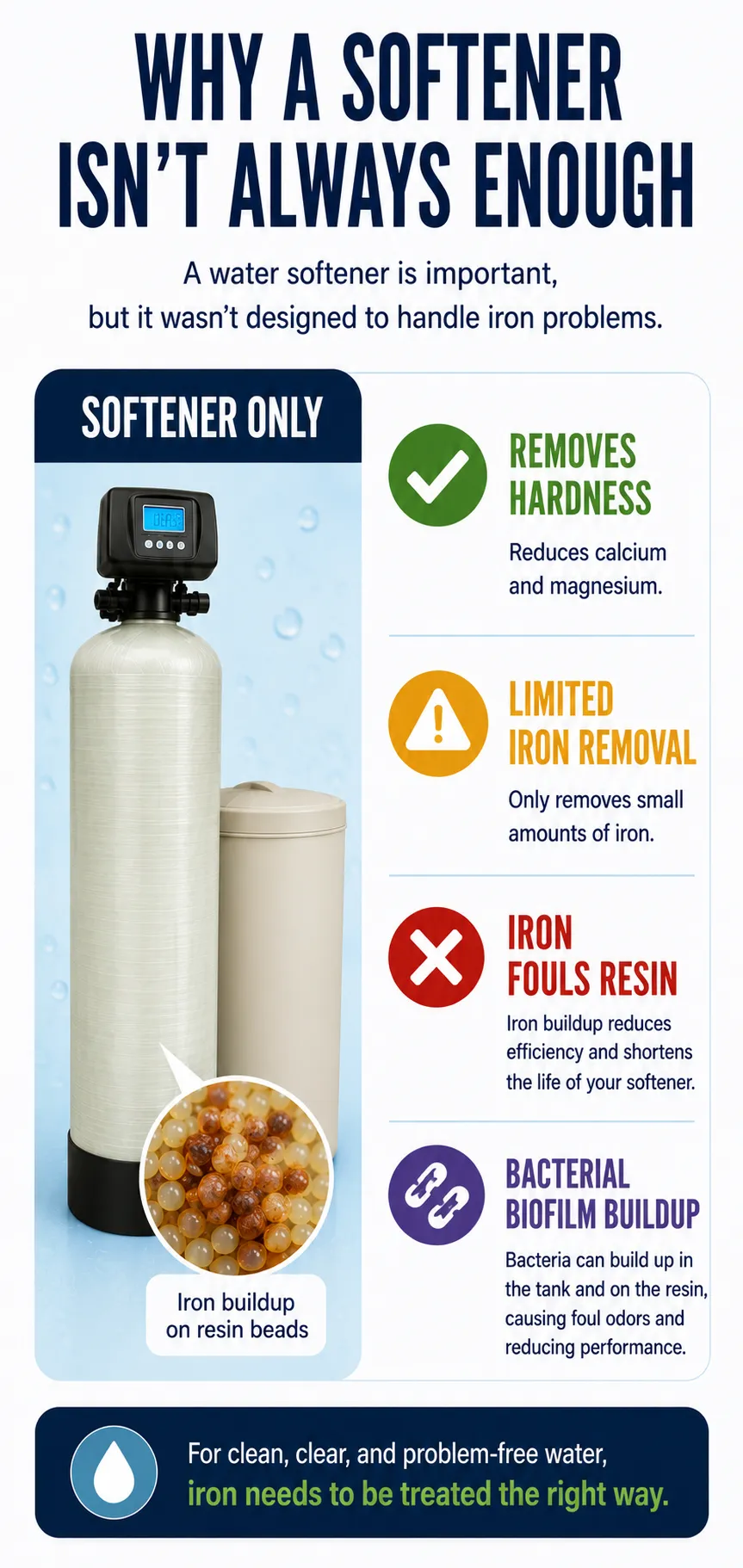
One of the most common misconceptions among homeowners is that installing a water softener will automatically solve every iron problem. While a water softener can remove small amounts of dissolved iron under the right conditions, it was never designed to serve as a primary iron filtration system for every well.
A water softener works by exchanging hardness minerals like calcium and magnesium for sodium or potassium through a bed of ion exchange resin. Because dissolved ferrous (clear water) iron carries a similar electrical charge, the resin is also capable of removing limited amounts of iron. However, once iron levels increase or other contaminants are present, the limitations of relying solely on a softener become apparent.
As iron accumulates on the resin beads, it can begin to foul the resin, reducing its ability to soften water efficiently. Over time, this may lead to decreased softening capacity, more frequent regenerations, increased salt consumption, and a shorter overall lifespan for the resin. In severe cases, homeowners may notice hardness returning long before the softener is scheduled to regenerate because the resin has become coated with iron deposits.
Many Florida wells also contain sulfur, manganese, tannins, or oxidized iron, contaminants that a traditional water softener is not intended to remove effectively. Even if the softener removes some dissolved iron, these additional water quality issues may continue causing staining, odors, discoloration, or poor water quality throughout the home.
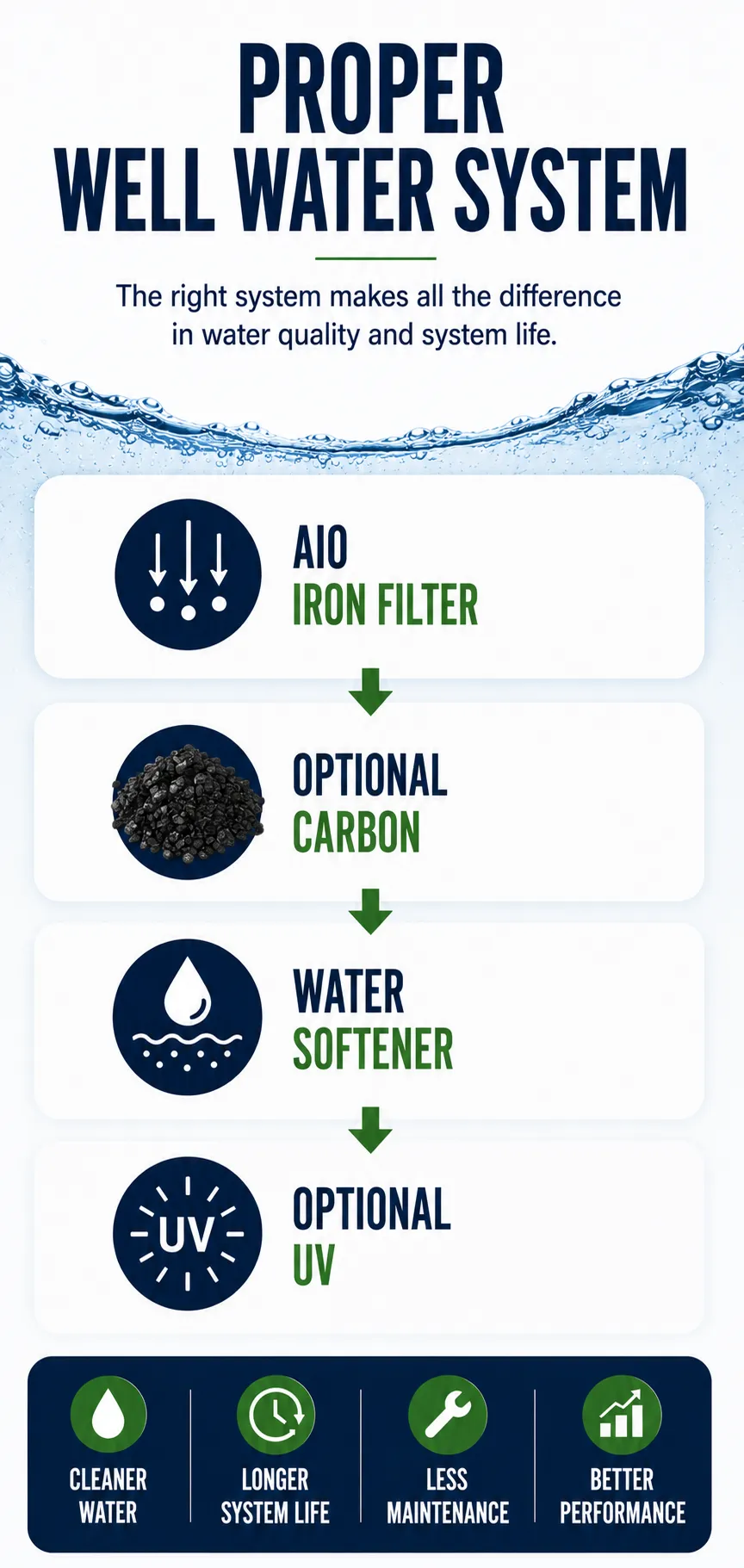
For this reason, many well water systems benefit from a dedicated iron filtration system installed before the water softener. By removing the majority of the iron before the water reaches the softener, the resin stays cleaner, regenerates more effectively, and typically lasts much longer. This approach not only improves water quality but also reduces maintenance and helps protect your investment in the softener itself.
Iron Bacteria Explained
Despite the name, iron bacteria are not actually made of iron. They are naturally occurring microorganisms that live in groundwater and use dissolved iron as an energy source. As they consume the iron, they produce a thick, slimy deposit that is typically orange, brown, or reddish in color. This slime can accumulate inside well casings, pressure tanks, plumbing pipes, toilet tanks, and water treatment equipment.
One of the most common signs of iron bacteria is a slippery orange slime inside toilet tanks or around faucets and drains. Some homeowners also notice a swampy, musty, or oily odor coming from their water. In severe cases, iron bacteria can clog plumbing, reduce water flow, foul pumps and pressure switches, and interfere with the performance of water treatment systems.
Iron bacteria are generally not considered harmful to human health, but they can create significant nuisance problems and increase maintenance costs if left untreated. Because the bacteria continuously produce slime, simply cleaning stained fixtures or disinfecting plumbing may only provide temporary relief if the source of the bacteria remains in the well.
Proper diagnosis is important because the symptoms of iron bacteria can sometimes resemble those of high iron or sulfur bacteria. A professional water analysis, combined with an inspection of the well and plumbing system, can help determine whether iron bacteria are present. Once identified, treatment may involve well disinfection, shock chlorination, mechanical cleaning, or installing the appropriate water treatment equipment to help control future growth and improve overall water quality.
The Best Way to Remove Iron from Well Water
There is no single water treatment system that is right for every well. The best way to remove iron depends on how much iron is present, what form of iron it is, and what other contaminants are in the water. Two homes with similar staining problems may require completely different treatment solutions because their water chemistry is different.
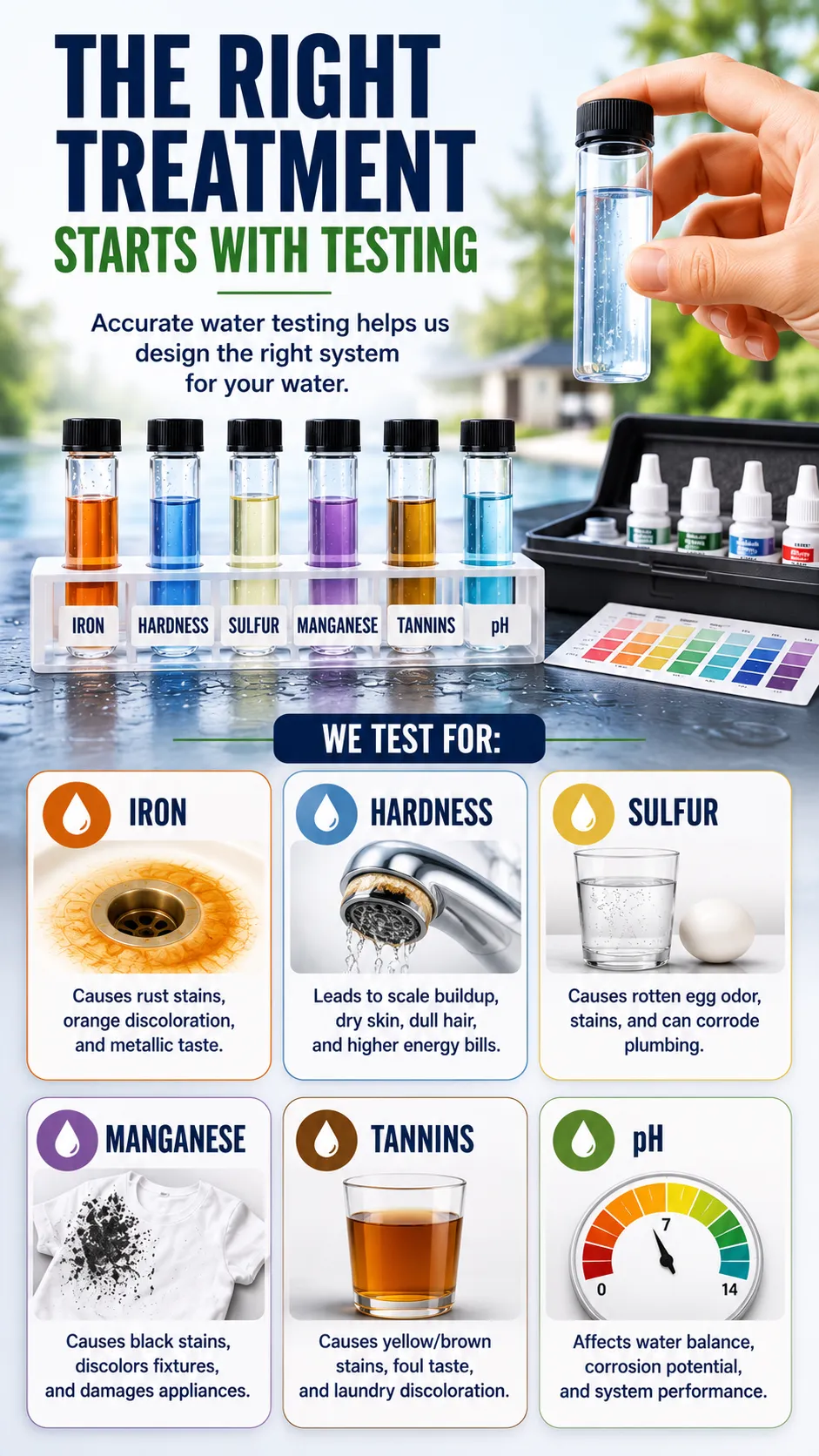
The first and most important step is a professional water analysis. Testing identifies not only the iron concentration but also other factors that influence treatment, including pH, hardness, manganese, sulfur, tannins, and water flow requirements. Designing a system without this information often leads to disappointing results and unnecessary maintenance.
For many Florida wells, an Air Injection Oxidation (AIO) system with Katalox Light media provides an excellent solution for removing dissolved iron. The system introduces air into the treatment tank, causing dissolved iron to oxidize into tiny particles that are then captured by the filtration media. During scheduled backwash cycles, these trapped contaminants are flushed from the system, helping maintain long-term performance without the need for disposable filter cartridges.
In many homes, iron isn't the only concern. Hardness minerals are also common throughout Florida, which is why a dedicated high-efficiency water softener is often installed after the iron filter. Removing iron before the water reaches the softener helps protect the resin from fouling, improves efficiency, reduces salt consumption, and can significantly extend the life of the softener.
If the water also contains tannins, sulfur, manganese, bacteria, or other contaminants, additional treatment stages may be recommended depending on the results of the water analysis. Because every well is different, properly matching the treatment system to the water chemistry is essential for achieving reliable, long-term results.
At 1st Choice Water Softeners, every water analysis is performed by me, Tayler, owner and operator. I don't believe in recommending the same system for every home. Instead, I test your water, explain exactly what the results mean, and design a treatment solution based on your specific water conditions. That approach not only produces better water but also helps protect your investment by ensuring the equipment is properly matched to your home's needs from the very beginning.
How Do We Test Your Water?
At 1st Choice Water Softeners, every estimate begins with a completely free in-home water analysis. Rather than making recommendations based on your zip code or a general assumption about your area, we test the water coming directly from your home. This allows us to understand exactly what's in your water and recommend a solution tailored to your specific needs.
During your appointment, we'll test for water hardness and, when applicable, check for common Florida water issues such as iron, sulfur, tannins, chlorine, pH, and other factors that may affect water quality. We don't just hand you the results—we explain what each test means, answer your questions, and discuss how your water may be affecting your home.
We'll also take the time to learn about your goals, inspect where your water enters the home, discuss installation options, and identify any plumbing requirements needed for your system. Every recommendation is based on your water, your home, and your family's needs—not a one-size-fits-all sales approach.
Our goal is simple: to provide honest recommendations, educate you about your water, and help you make an informed decision with absolutely no pressure or obligation.
Why Homeowners Choose 1st Choice Water Softeners
Choosing a water treatment company isn't just about buying equipment—it's about choosing the people who stand behind it.
At 1st Choice Water Softeners, our philosophy has always been simple: Premium Quality. Honest Pricing. Maximum Value.
As the owner and operator, I personally perform every water test, design every system, complete every installation, and provide future service. When you call 1st Choice Water Softeners, you're working directly with the person who will be responsible for your water from start to finish. There are no commissioned salespeople, no subcontractors, and no passing you from one department to another.
Premium quality starts with the equipment we install. That's why we use industry-leading components, premium control valves, high-quality mineral tanks, and carefully selected filtration media designed for long service life and dependable performance. Every component is chosen with reliability and long-term value in mind because we believe the best system is one that continues performing year after year.
Just as important as the equipment is the installation itself. A premium system deserves a premium installation. I take pride in building clean, organized plumbing layouts that are easy to service, built to last, and look like they belong in your home. Whenever possible, I go the extra mile to improve the appearance, accessibility, and overall quality of every installation—even when it means spending several extra hours on the job. Those details may not always be noticed on day one, but they make a difference in reliability, serviceability, and the pride you'll have every time you walk past your equipment.
I also believe homeowners deserve honest recommendations—not the most expensive recommendation. Every system is designed around your water quality, your home's plumbing, your family's water usage, and your goals. If you don't need a larger or more advanced system, I'll tell you. My job is to recommend the solution that provides the greatest long-term value, not simply the highest price.
My goal has never been to be the biggest water treatment company in Florida. My goal is to build systems I'm proud to put my name on, treat every customer's home with the same care I'd expect in my own, and provide a level of craftsmanship and service that's difficult to find today.
That's what Premium Quality. Honest Pricing. Maximum Value. means to me, and it's the standard I strive to deliver on every single installation.
Frequently Asked Questions
Can a water softener remove iron?
Yes, a water softener can remove small amounts of dissolved (clear water) iron, but it is not designed to be the primary treatment for every iron problem. Higher iron concentrations, oxidized iron, or water containing sulfur, manganese, or tannins often require dedicated iron filtration before the softener. Removing iron first helps protect the softener's resin, improves efficiency, reduces maintenance, and can significantly extend the life of the system.
Why does my water come out clear and then turn orange?
This is one of the most common signs of dissolved (ferrous) iron. While underground, the iron remains completely dissolved in the water, making it appear clear. Once the water is exposed to oxygen at your faucet, the iron begins to oxidize and forms tiny rust particles. As this process continues, the water may turn yellow, orange, or brown and eventually leave behind the familiar rust-colored stains on plumbing fixtures and laundry.
Is iron in well water harmful?
Iron is generally not considered harmful at the levels typically found in private wells. The Environmental Protection Agency (EPA) classifies iron as a secondary drinking water contaminant because the recommended limit is based on taste, odor, staining, and appearance rather than health concerns. While iron itself is usually safe to consume, excessive amounts can affect the taste of your water, stain fixtures and clothing, and reduce the efficiency of plumbing and appliances throughout your home.
What causes orange stains in toilets and sinks?
Orange stains develop when dissolved iron reacts with oxygen and changes into rust particles. Those particles stick to toilets, sinks, bathtubs, showers, and other plumbing fixtures, gradually building up over time. Cleaning the stains may temporarily improve their appearance, but they will continue to return until the iron is properly removed from the water supply through the appropriate treatment system.
Can boiling water remove iron?
No. Boiling water does not remove iron. In fact, boiling can slightly increase the concentration of dissolved minerals because some of the water evaporates while the iron remains behind. If iron is causing staining, discoloration, or a metallic taste, the proper solution is a correctly designed water treatment system rather than boiling the water.
Does a Brita® filter remove iron?
Standard pitcher filters, such as Brita®, are designed to improve the taste and odor of drinking water but are not intended to remove the levels of iron commonly found in private well water. If your home has orange staining, rusty water, or elevated iron levels, a whole-house treatment system is typically needed to address the problem before the water reaches your faucets.
Will Reverse Osmosis remove iron?
Reverse osmosis systems are capable of removing dissolved iron, but they are designed primarily for producing high-quality drinking water at a single faucet. Because excessive iron can foul and shorten the life of the RO membrane, iron should generally be removed with a whole-house treatment system before the water reaches the reverse osmosis unit.
How do I know if I have iron bacteria?
Iron bacteria often produce a slimy orange, brown, or reddish buildup inside toilet tanks, plumbing fixtures, and well equipment. Some homeowners also notice a musty or swamp-like odor, clogged plumbing, or recurring slime that quickly returns after cleaning. Because these symptoms can resemble other water quality issues, a professional water analysis is the best way to determine whether iron bacteria or another contaminant is responsible.
Why does my neighbor have different water than I do?
It's common for neighboring homes to have completely different water quality, even if they're only a few hundred feet apart. Differences in well depth, aquifer conditions, geology, groundwater flow, and well construction can all affect the minerals and contaminants present in your water. One homeowner may have high iron, while the house next door has sulfur, tannins, manganese, or very little contamination at all. Because every well is unique, the only way to know exactly what's in your water is through a professional water analysis. Testing ensures the treatment system is designed specifically for your home's water chemistry rather than relying on assumptions or a one-size-fits-all solution.